(Exhibition text in English, referring to a QR code in the exhibition)
Tailored, unlined wool jackets were often worn over leather ones. Pickadils, a legacy of Renaissance fashion, were common, as were decorative ribbons in contrasting colours. In 1778, the Swedish king Gustav III drew inspiration from Scanian men’s jackets when designing a new court costume – the Swedish national dress.
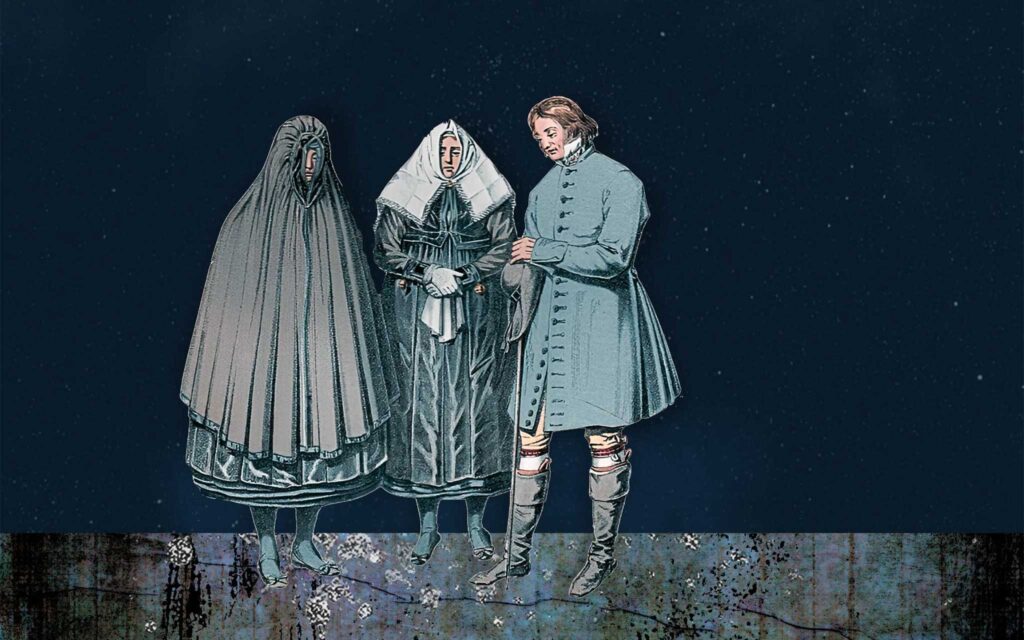
In the late 18th century, older wealthy farmers began wearing fitted coats, modelled after the Swedish military uniform. That uniform was itself inspired by a French fashion coat, which had roots in both soldier and peasant dress. In line with changing fashion, the farmers’ coats were later made with lapels and collars.
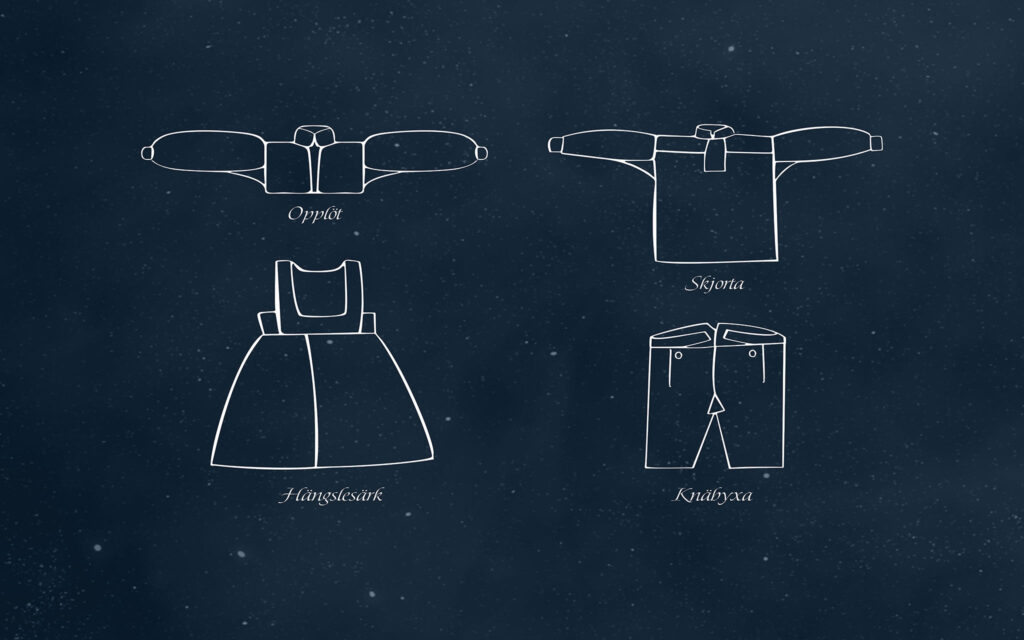
In summer, men might go without a jacket, which is why older folk vests are often made from the same fabric front and back. In contrast, vests worn by the upper classes have backs in lining fabric, as they were rarely worn without a coat.