Brödragården
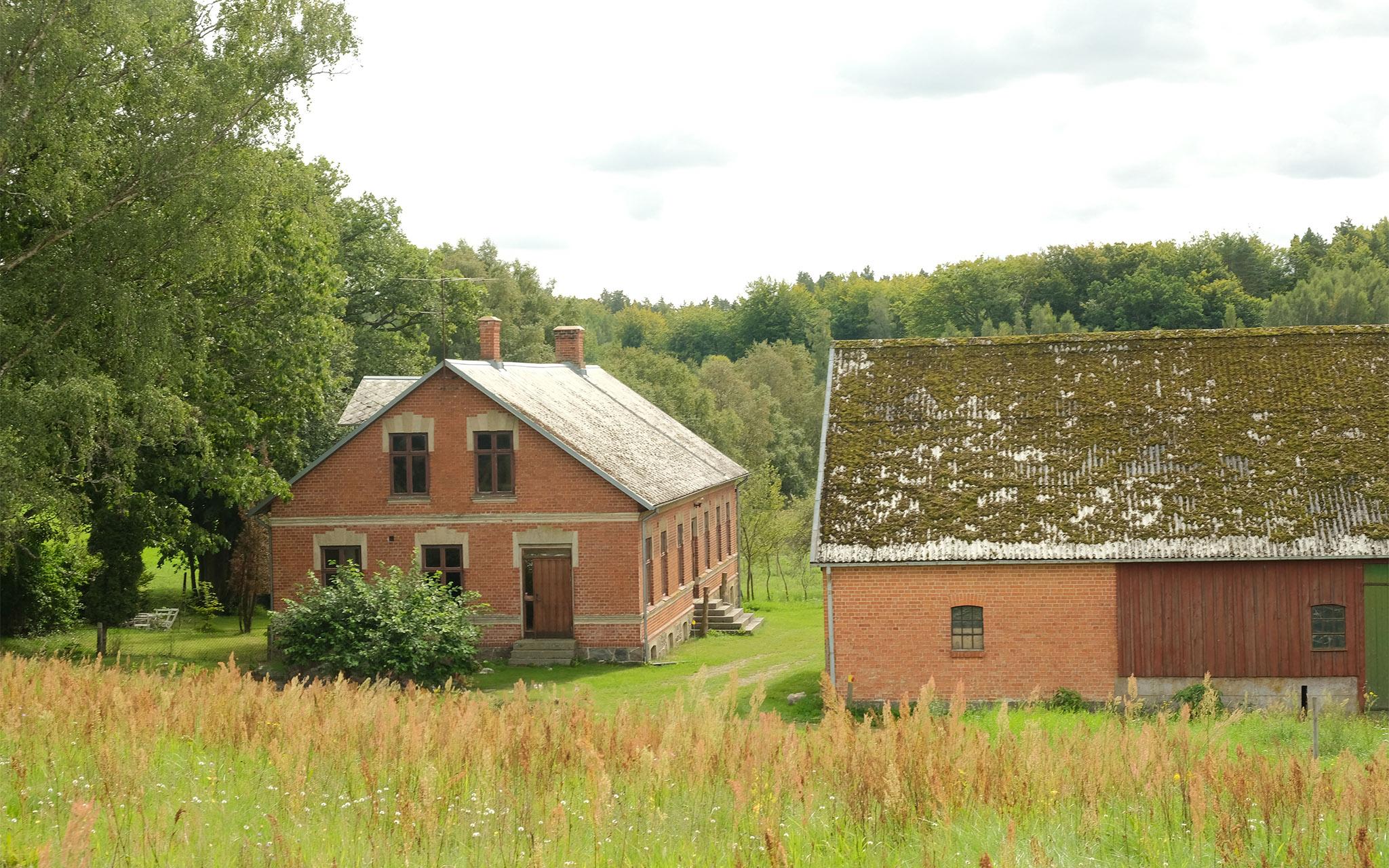
Brödragården
The farm, with its brick buildings dating back to the early 20th century, is known today as Brödragården (The Brothers' Farm), named after the three brothers Alrik, Einar, and Gunnar. The three of them lived on and ran the farm together during the 1900s.
Residential House Built in 1907
The current residential house was built in 1907 by the farm’s owner at the time, Elna Nilsson. Her nephew Per Jönsson and his wife Ingri leased the farm back then and later purchased it in 1910. The couple had four children: Alrik, Gunnar, Einar, and Anna.
Three Brothers
The three brothers lived on the farm for their entire lives. Alrik, the eldest, inherited the property and ran the farm with the help of his two brothers. In 1995, the farm was acquired by Kulturen.
Original Wallpapers and Paintings
The residential house is well-built, and most rooms have preserved their original wallpapers as well as their wall and ceiling paintings. The paintings were created by master painter Nils Sjöberg from Veberöd. The basement contains storage spaces and a baking oven, while the attic was used to store grain.
The Outbuildings
The outbuildings were all modernized during the first half of the 20th century. The northern building is a barn containing a farmhand’s room, a garage, and a large chimney used for smoking meat. The western wing features a horse stable to the north and a cowshed to the south. The southern wing housed stables for young livestock and pigs, a garage, and a lower floor equipped with a root cellar, an outhouse, and a chicken coop.
Origins of the Farm
The farm originally stood on the hill to the northwest, right next to Gamlegård. The farm buildings were moved to their current location in 1843, in connection with a new generation taking over the property.
Acquired by Kulturen in 1995
In 1995, Kulturen purchased the farm’s buildings and land, which then became a part of the Kulturen's Östarp open-air museum.